Templates and Assets
A template is a type definition for assets. An asset is an instance of this type definition. The template is based on XML and defines, for example, the possible attributes, possible relationships to other templates, and which actions can be triggered.
A single asset represents the specific values within the range of possible values—that is, the values within the constraints defined in the template, such as the characters of a string attribute or the IDs of the associated assets.
Architecture
The Data Management module relies on various objects for managing Leader data: organizations, templates, and assets.
An organization is the business and technical environment within which templates and assets are assigned and stored. Specifically, the OrganizationID defines the storage location where templates and assets are stored together and can be found.
A template is a model. It defines the properties and appearance of data stored in assets. Within templates, other templates can be referenced; these are relational relationships.
In each template itself, the relationship to the desired other template is defined using a parent-child relationship. Within this, you can also define various properties for the relationship, such as the number of parents that reference the child.
An asset is ultimately the specific Leader data object defined based on the template. It now contains real data that is actively used.
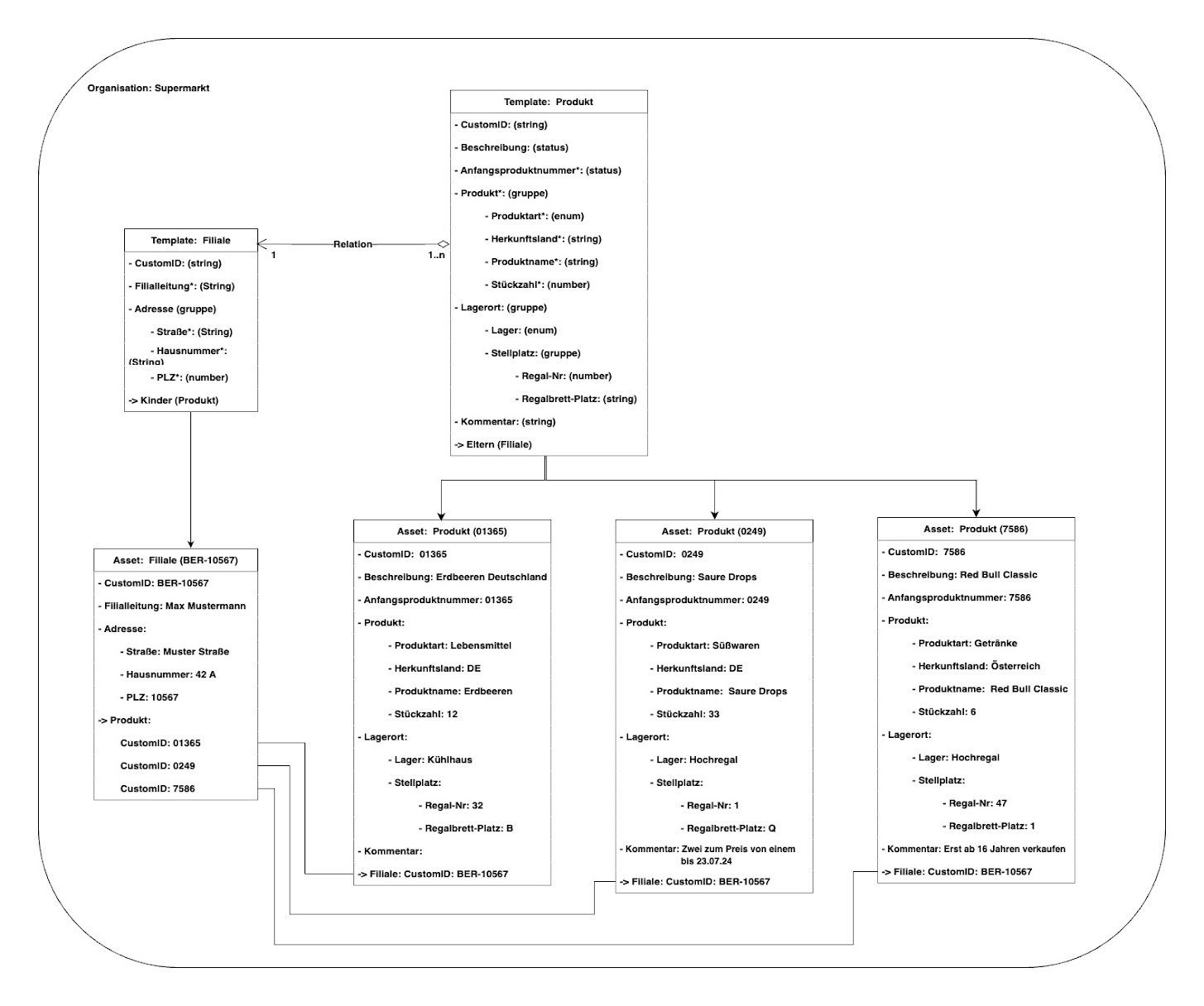
The diagram shows a possible structure for a supermarket chain. The organization is the supermarket, which in this case has several branches. Each branch has different products, and it manages their quantities, inventory information, and properties. A branch has multiple products, while each product belongs exclusively to one branch.
